
Case stages: IMPROVING THE DIAGNOSIS AND TREATMENT OF ADENOVIRUS CONJUNCTIVITIS.
Introduction -Adenoviral conjunctivitis is a highly contagious inflammation of the conjunctiva caused by adenoviruses. It most commonly occurs in groups of children and can cause severe outbreaks. Effective diagnosis and treatment of this condition are essential to reduce its spread and improve the quality of life of patients.
The aim of the work: The aim was to develop a strategy to improve the diagnosis, treatment and prevention of adenoviral conjunctivitis in ophthalmological practice.
Description of the situation:
The patient is 2.5 years old (born September 11, 2023)
Complaints: The right eye is swollen, the skin of the eyelids is red, the eye slit does not open due to chemosis of the eyelids and severe pain.
Anamnesis of anamnesis: The duration of the illness is 7 days, possibly infected fromyounger brother (two-month-old baby) in the family, who previously had conjunctivitis. Mother «I went to the local clinic. They prescribed painkillers and fever reducers, but they didn't help. The ophthalmologist prescribed eye drops. I instill Ophthalmoferon drops every hour».
On February 4, the condition of the right eye began to deteriorate, with swelling of the upper and lower eyelids, conjunctival redness, and severe eye pain. The child was referred to City Clinical Children's Hospital No. 1, where the patient's mother was told there was no indication for hospitalization and was advised to continue the same drops at home.
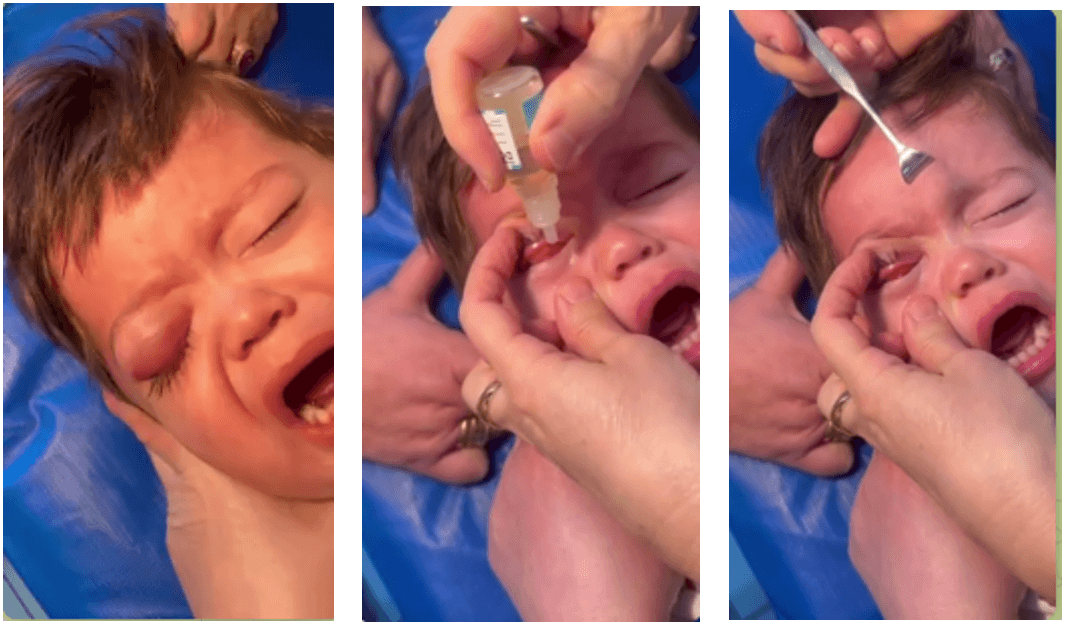
On February 5, the child's parents returned to the Republican Clinical Hospital for Children and Youth, where, after an examination, they decided to remove the fibrin film from the conjunctiva, after which a 1% dexamethasone solution was inappropriately injected into the temple. The condition in the right eye progressed, with clinical signs of keratoconjunctivitis appearing, as well as conjunctivitis developing in the left fellow eye, which prompted and justified the patient's urgent hospitalization in the pediatric ophthalmology department of City Children's Hospital No. 1.
Diagnosis at hospitalization: OD - adenoviral keratoconjunctivitis associated with acute respiratory viral infection (ARVI).
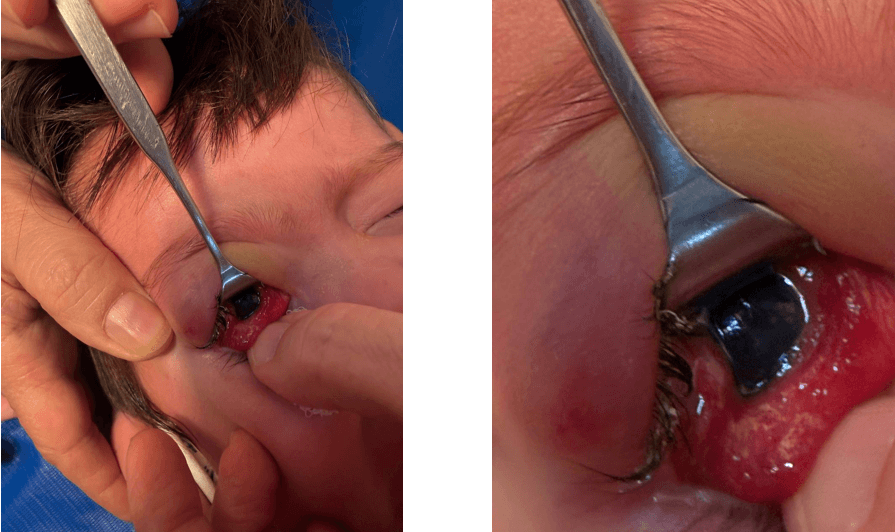
A patient diagnosed with adenoviral conjunctivitis
Studying medical history
1. Delayed diagnosis due to misunderstanding of symptoms, late visit to the clinic see a doctor in a week.
2. Incorrect treatment based on false assumptions about the viral nature of the disease (I took painkillers and fever reducers, but it didn't help. Removal of the fibrin film from the conjunctiva and injection of 1% dexamethasone into the temple resulted in keratoconjunctivitis.
3. Lack of effective preventive measures among patients – on initial stage younger brother (A two-month-old baby in his family fell ill with conjunctivitis.
Goals:
1.Analysis of modern approaches to the diagnosis and treatment of adenoviral conjunctivitis.
2. Develop recommendations for doctors to improve diagnostics and treatment.
3. Create a prevention program for patients.
Stages
1. Analysis of the current situation:
Conducting a survey among clinic doctors about the frequency of cases of adenoviral conjunctivitis and methods of their treatment.
– Study of the medical history of patients diagnosed with adenoviral conjunctivitis in the last 12 months.
2. Problem solving:
– To identify the main difficulties in diagnosis (for example, confusion with allergic conjunctivitis).
– Identification of common errors in treatment (for example, prescribing antibiotics and hormones for viral infections).
3. Develop recommendations:
– Development of an algorithm for diagnosing adenoviral conjunctivitis, including the main symptoms (redness, itching, discharge) and laboratory diagnostic methods.
– Development of treatment protocols, including recommendations for symptomatic therapy (cold compresses) and explanation to patients that antibiotics are ineffective against viruses.
4. Prevention program:
– Creation of educational materials for patients on ways to prevent the spread of infection (hand hygiene, avoiding close contact).
– conduct seminars in kindergartens and schools for parents on the signs and precautions for the disease.
5. Evaluation of results:
– conduct a second survey among doctors 6 months after the implementation of the recommendations.
– Assessment of the incidence of adenoviral conjunctivitis and patient satisfaction.
The main drugs used in treatment:
treat both eyes with a 1:5000 Furacilin solution
Inside:
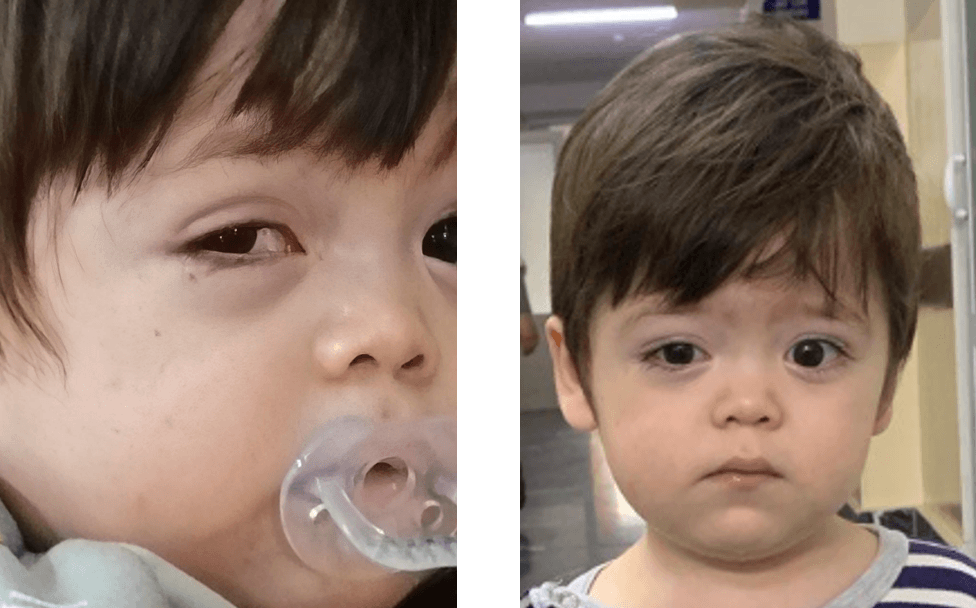
Expected results
• To improve the accuracy of diagnosis of adenoviral conjunctivitis.
• Reduce the number of incorrect treatment prescriptions.
• Increase patient awareness of prevention.
Conclusion
This condition may help ophthalmologists improve their skills in diagnosing and treating adenoviral conjunctivitis, as well as increase patient awareness of preventive measures, which may lead to a reduction in the incidence of the disease and improved public health.
Questions about this clinical case:
1. Describe the main symptoms of adenoviral conjunctivitis and how they may differ from the symptoms of allergic conjunctivitis.
2. Explain why antibiotics are ineffective in treating adenoviral conjunctivitis.
3. List key eye care recommendations for patients diagnosed with adenoviral conjunctivitis.
4. What complications can occur if adenoviral conjunctivitis is not diagnosed and treated properly?
5. Describe how educational work can be organized among the population to prevent adenoviral conjunctivitis.
Situational tasks
1. Situation: A child in kindergarten has started complaining of itchy, red, and teary eyes. What do you do as a doctor? Describe the diagnosis and treatment plan.
2. Situation: A patient comes to the clinic with a diagnosis of allergic conjunctivitis, but after examination, adenoviral conjunctivitis is suspected. How do you proceed? What tests and recommendations do you suggest?
Comments (0)
No comments yet